Currently Empty: £0.00
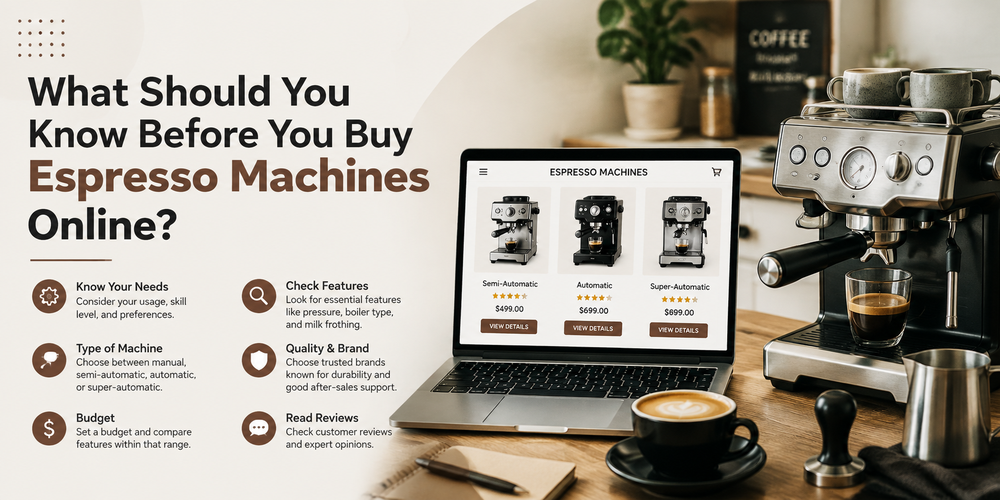
Coffee fans all over the country are moving away from random café runs, to doing café-quality brewing right at home, and if you ask me the quickest path is just to buy espresso machines online. Since there are so many versions, different brands, and price tiers to choose from at the click of a button, online shopping usually eats less time and you can sometimes snag better deals than you’d see inside a store. Still, espresso machines are not exactly one of those “fits everyone” appliances, the wrong match can lead to weak shots, milk that turns out flat or just a machine sitting there in the corner for months. So, if you’ve been staring at something like the Ciao E2 2 Group Espresso Machine online, or you’re comparing entry-level models for your kitchen counter, this little walkthrough tells you what to check before you tap “buy”.
Things You Should Know Before You Buy Espresso Machines Online
- Know the Different Types of Espresso Machines
Before you even compare prices, take a minute and figure out what you’re actually buying. Espresso machines tend to group into a few main types, and the type matters way more than the brand label.
- Manual espresso machine: You get full control over pressure and extraction, great for folks who like the craft of pulling a shot by hand. Sure, it takes some practice, but it also rewards you with real precision.
- Semi-automatic espresso machine: Honestly, this is the most common pick for home use and café settings. You handle grind and tamp, while the machine runs the water pressure and temperature, kind of balancing control with convenience.
- Fully automatic espresso machine: Grinding, dosing, tamping, and brewing happen when you press a button. Nice for busy households or offices that want consistency without a learning curve.
- Bean to cup espresso machine: Like fully automatic, but one step more it grinds fresh beans for every single drink, and that freshness is something pre-ground coffee just can’t reliably mimic.
Once you know which category fits your daily routine, narrowing the search gets a lot easier, and buyer’s remorse has less room to sneak in.
Decide Between Built-In Grinder or Separate Grinder
One of the biggest head-scratchers is: do you want an espresso machine with a grinder, or would you rather grind separately? A machine that includes the grinder helps with counter space, and it also keeps the beans freshly ground right before extraction, which tends to keep flavor brighter compared with pre-ground coffee that loses aroma fairly quickly. On the other hand, separate grinders can be more useful if you enjoy experimenting like tweaking grind size for different roasts, or trying new brewing directions beyond classic espresso. If you’re setting up something like a small café , a hotel breakfast counter, or an office pantry, units with integrated grinding, especially a Bean to cup espresso machine often reduce workflow steps and can lower staff training time, which matters when the goal is speed plus consistency.
Milk Frothing Matters More Than You Think
If lattes, cappuccinos, or flat whites show up in your day, don’t treat the frothing system like an afterthought. A machine with a milk frother, whether it’s a manual steam wand or an automatic frothing carafe—pretty much decides how close your homemade drinks get to café standards. Manual espresso machine wands give you more control over texture, which is great for latte art lovers. Automatic frothers are faster, and more predictable, which helps in restaurants or offices where volume is the boss.
This is also where mid-range machines with a more commercial approach can look really attractive. For businesses trying to expand a beverage menu without hiring a dedicated barista, it’s smart to consider an option like the Expobar Elegance 2 Group Compact, it brings dependable frothing performance along with dual-group brewing so service stays quick during busy stretches. You can order Expobar Elegance 2 Group Compact online and get a commercial-grade setup turned on within days instead of waiting weeks, too.
Check Build Quality, Warranty, and After-Sales Support
Online listings make everything look sleek and premium, but build quality can swing a lot. Try to look at:
- Material: Stainless steel boilers and brass group heads generally hold up longer than plastic parts.
- Warranty period: Good sellers often provide at least 1–2 years, and commercial units can sometimes include more.
- Spare parts availability: Established suppliers usually make servicing easier later on, and that matters a ton with commercial-grade equipment.
- Verified seller ratings and reviews: Real buyer feedback tells you about long-term reliability much better than marketing language.
Skipping this step is usually where online shoppers slip up. Two machines can look basically identical in photos, but perform very differently once they’re under real daily pressure, especially if it’s going to be used commercially.
Match the Machine to Your Volume Needs
A home espresso setup and a café-grade setup are built for very different workloads. If you’re buying for personal use or a small household, a compact semi-automatic machine or a bean-to-cup unit is often enough. But if you’re equipping a café, restaurant, or office area that serves dozens of cups per day , then you want commercial durability, steady continuous brewing, larger boilers, and multi-group heads. That’s why two-group machines are such a common “sweet spot.” If you’re scaling up your café workflow, you can buy Ciao E2 2 Group Espresso Machine online, and it can handle simultaneous orders without overheating or slowing service, which is a common issue when underpowered home machines get pushed into commercial duty.
Final Thoughts Buy espresso machine online
When you buy espresso machine online, it doesn’t have to feel chaotic once you know what to check. The machine type, the grinder setup, the frothing system, build quality, and volume capacity all matter more than people expect, especially if you want something that truly fits what you do at home. If you’re a home enthusiast comparing a semi automatic espresso machine with a fully automatic espresso machine, or you’re a business owner ready to invest in commercial-grade gear, doing a quick comparison up front helps you avoid extra money and frustration later. For anyone ready to make that choice, dipacicoffeemachine.com offers a curated mix of home and commercial espresso machines, including well known options like the Ciao E2 2 Group and Expobar Elegance 2 Group Compact, with genuine after-sales support so you can brew with some real confidence, not guesswork.
Frequently Asked Questions
- What’s the difference between a semi automatic and fully automatic espresso machine?
A semi automatic espresso machine asks you to manage grinding and tamping yourself, while the machine handles water pressure. A fully automatic espresso machine does basically everything, including grinding and dosing, at the push of a button. - Is a bean to cup espresso machine worth the extra cost?
Yes, if you care about fresh flavor. A bean to cup espresso machine grinds the beans just before brewing, so you get stronger aroma and taste compared with machines that use pre-ground coffee. - Do I need an espresso machine with a built-in grinder?
Not necessarily. It’s convenient and saves space, but if you like dialing in grind size for different beans or brewing styles, a separate grinder might give you better flexibility. - How important is milk frother when buying online?
It’s pretty important if you drink milk-based coffee often, like lattes or cappuccinos. Check the listing for a manual steam wand or an automatic frothing system, because that changes texture and day to day convenience. - Are commercial espresso machines like the Ciao E2 2 Group suitable for home use?
They can be, especially for serious enthusiasts or small home cafés, but they’re mainly built for high volume environments such as restaurants and coffee shops, due to dual group capacity. - What should I check before buying an espresso machine online?
Review the machine type, grinder setup, frothing system, build materials, warranty coverage, and seller reviews before committing. - How long does a good espresso machine typically last?
With the right maintenance, a solid semi automatic machine or a commercial model can last around 5 to 15 years, depending on how heavily it’s used and the quality of the components. - Is it safe to buy espresso machines online?
Generally, yes, if you buy from a verified and reputable seller that offers warranty coverage, clear specifications, and consistent after-sales support.